Revealing the Unexpected: 5 Surprising Causes of Sacroiliac Joint Pain
When it comes to joint problems, the inability to identify the exact joint causing you pain can be frustrating. Generally, joint pain can occur due to arthritis, infection, injury, and other factors. Use of painkillers could affect your liver, especially when used all the time.
Thus, identifying the underlying cause of joint pain is ideal for addressing the condition and preventing progression. In this article, you’ll learn about five surprising causes of sacroiliac joint pain you mightn’t have realized before.
What is the Sacroiliac Joint?
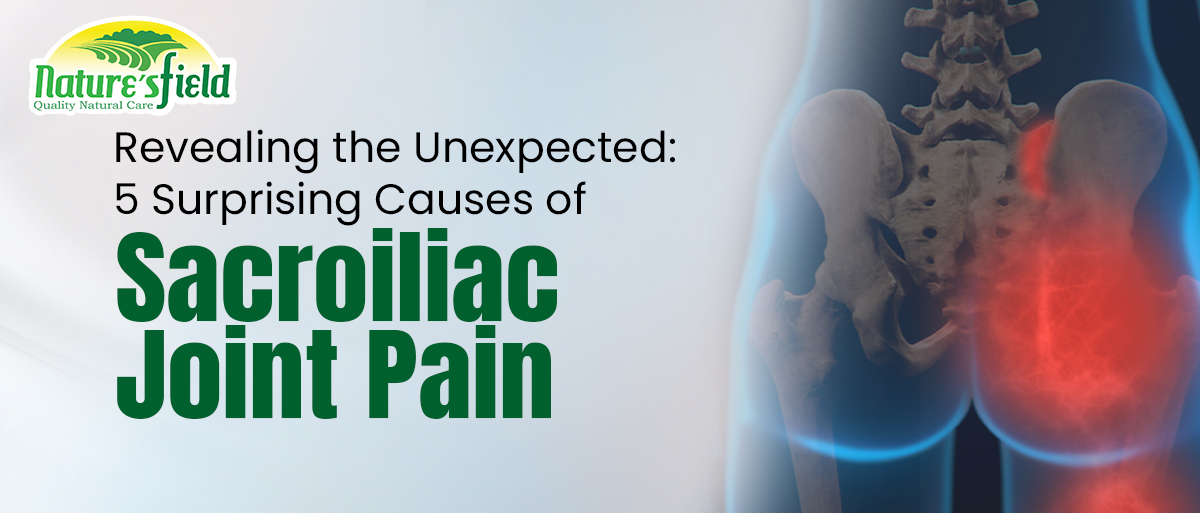
The sacroiliac joint (SI joint) is a joint that forms a crucial link between your lower spine and the pelvis. That is, there is a triangular bone at the lower part of the spine called the sacrum, which is connected to the top part of the pelvis (called the ilium). The joint that connects these two bones (i.e., sacrum and ilium) is the sacroiliac joint.
This is a powerful weight bearing joint that transfers force from the upper body to the lower limbs. Thus, pain or inflammation in this joint which could be due to injuries, arthritis or strain can cause pain the legs and lower back. This joint supports a range of motion when you walk, bend or twist your hips. However, the SI joints have very limited range of motion.
5 Surprising Causes of Sacroiliac Joint Pain
Beyond arthritis and injuries, other causes of sacroiliac joint pain include the following;
- Referred pain: Women who experience pain in the ovaries due to the presence of cysts can also have pain in the sacroiliac joint.
- Pregnancy: Increased weight and subsequent hormonal changes during pregnancy can cause joint looseness. This is for the pelvis to stretch and widen before childbirth. Pregnancy can also change your manner of walking which could cause SI joint pain.
- Bacterial bone infection: These infections, such as osteomyelitis and septic arthritis, can spread to the sacroiliac joint and cause pain and inflammation.
- Autoimmune disorders: These disorders such as rheumatoid arthritis, inflammatory bowel disease, lupus, ankylosing spondylitis can trigger inflammation in the joints and extend to the SI joints causing pain.
- Tailbone injury: The tailbone is a small, triangular bone located at the bottom of the spine and keeps you stable while sitting down. Apart from injury or when you accidentally fall, tailbone injury can surprisingly be caused by sitting down too much. This can place too much stress on your tailbone and can travel up the spine to the back of your neck. Consequently, this can stiffen the spine and tighten the sacroiliac joint, causing pain.
Holistic Ways to Promote Healing and Restore Joint Health
Experiencing joint pain in any area of your body can be debilitating, affecting movement and quality of life. Therefore, the following ways will help promote the healing of sacroiliac joint pain and boost joint health;
- Reduce the intake of foods cause inflammation and choose an anti-inflammatory diet consisting of leafy green vegetables, eggs, sardines, etc. Making good food choices is essential to someone with sacroiliac joint pain.
- Develop a daily habit of exercising, depending on your capability.
- Start using a joint support supplement: Particularly, supplements containing Vitamin D and glucosamine/chondroitin can naturally help relieve inflammation and reduce sacroiliac joint pain. NATURE’SFIELD JOINT RENEW MAXIMUM STRENGTH contains these incredible compounds for improving arthritis and joint conditions.
Managing any type of pain, especially when it is in a critical location can cause numerous disruptions to daily life. This necessitates the alternative methods of pain management and reduction of inflammation which includes using NATURE’SFIELD JOINT RENEW MAXIMUM STRENGTH. Quick, easy, and convenient, you can achieve effective pain management and better joint mobility from the comfort of your home.