Cirrhosis vs. Fibrosis: Understanding the Key Differences and the Role of Vitamin E
The liver has a remarkable ability to regenerate and recover from a lot of things you might not even be aware of. This could range from the variety of toxins that you unknowingly ingest to infections from pathogens. However, as self-cleansing as the liver is, long-term damage to the liver can lead to overwhelming consequences. These consequences can manifest as liver cirrhosis and fibrosis.
Although you might have encountered these terms previously, are you aware of what they mean in terms of your liver health? It is essential to understand the key differences between these conditions for accurate diagnosis and treatment procedures. Here, you will learn about the basics and differences between liver cirrhosis and fibrosis, as well as the role of Vitamin E in improving these conditions.
What Is Liver Fibrosis?
Fibrosis is scarring of the liver, which can come without symptoms. This means that healthy liver tissue is gradually being replaced by scar tissue. As a result, this leads to the hardening of the liver and disrupts its functions. Fibrosis progresses over time in people with hepatitis B or hepatitis C, and this tends to progress quickly in people who also have HIV. Fibrosis can be partially reversed if the cause is detected and managed.
However, liver fibrosis is a long-term consequence of the wound-healing process, which results from past chronic liver diseases. These diseases include viral hepatitis, alcoholic liver disease, non-alcoholic fatty liver disease, and other liver conditions.
What Is Liver Cirrhosis?
When cells are injured or damaged, the dead tissues become fibrotic and form scar tissue. With time, uncontrolled liver damage, caused by alcohol, drug overuse, etc, can lead to chronic scarring, which could be irreversible. In other words, cirrhosis is severe scarring of the liver.
These scar tissues can replace the cells that carry out the normal functions of the liver, disrupting blood flow through it. Consequently, the liver will no longer be able to work efficiently, which can ultimately lead to internal bleeding and brain impairment. Cirrhosis can be classified into compensated cirrhosis, where the liver can continue working more or less normally, and decompensated cirrhosis, where the liver function is failing.
Key Differences Between Cirrhosis and Fibrosis
| Fibrosis |
Cirrhosis |
| · Characterized by early stage scarring of the liver tissue | · Progressive stage of fibrosis marked by portal hypertension which is the hallmark feature |
| · Could be reversible | · Mostly irreversible |
| · Complications associated with fibrosis occurs when it progresses to cirrhosis/severe scarring | · Can cause complications such as ascites, kidney failure, gynecomastia, jaundice, etc |
| · Improves with intervention | · Can lead to complete liver failure without management |
| · Liver transplant is rarely recommended | · There might be need for liver transplant if it gets to the stage of permanent liver damage |
How Vitamin E Helps With Liver Health
Chronic liver diseases such as cirrhosis are associated with decreased antioxidant defense. This implies that the resident antioxidants in your body can get depleted in the presence of liver conditions. One notable culprit is alcohol consumption. The metabolite or by-product of alcohol, known as acetaldehyde, decreases the activity of the enzyme and causes damage to the mitochondria. Additionally, there are depleted levels of glutathione, which further increases the toxic effect of free radicals.
This is where Vitamin E comes in. Vitamin E is a powerful antioxidant that can help reverse the damage caused by fibrosis or cirrhosis. This is achieved by inhibiting the effect of free radicals, reducing inflammation, and slowing down the scarring of the liver tissues. This ultimately improves the levels of liver enzymes and reduces the risk of progressive liver damage.
The Way Forward
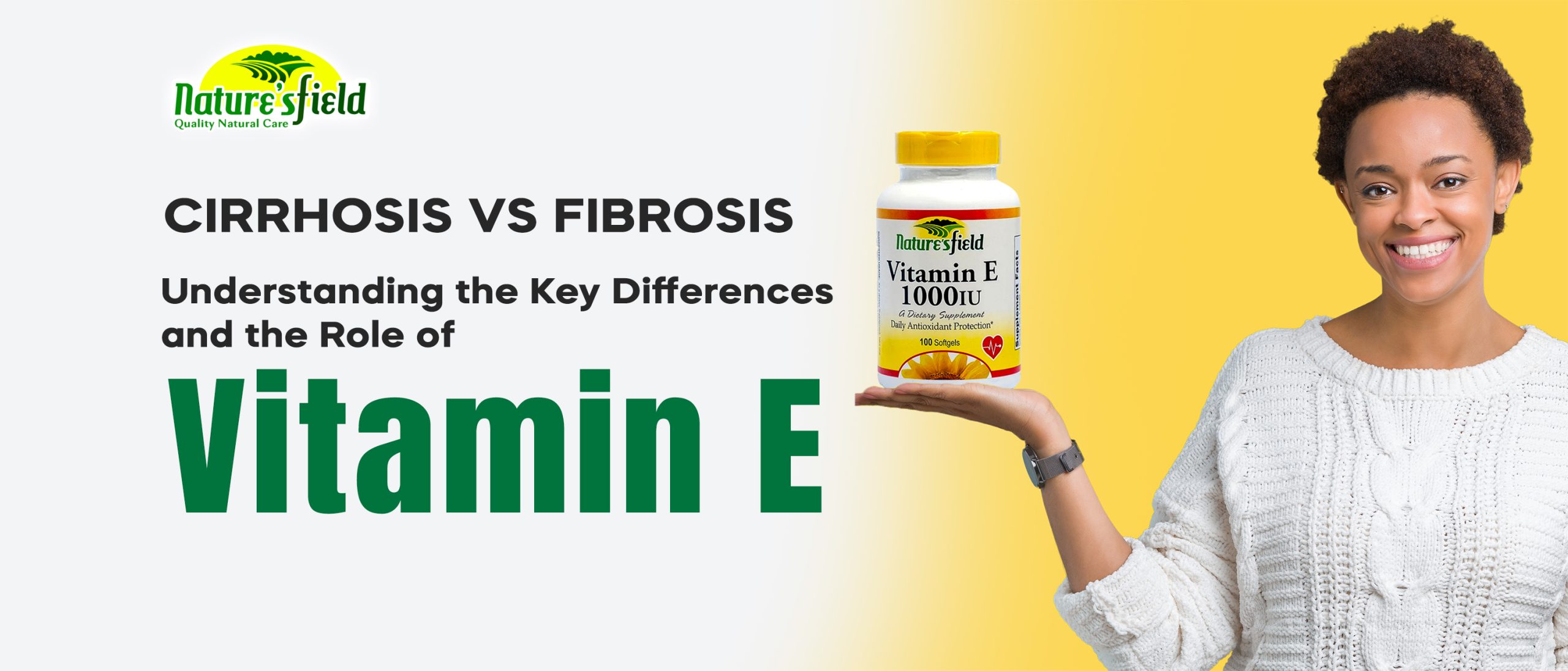
Your liver is one of the major detoxification organs in your body and silently supports the functions of other organs, including your heart. Therefore, you can maintain and improve your liver health by using NATURE’SFIELD VITAMIN E as part of your supplement routine.
Curbing habits such as smoking, excessive alcohol consumption, and drug overuse is critical for your liver health. Also, other complications of cirrhosis include the development of liver cancer, especially in people with decompensated cirrhosis. Improve your liver function with NATURE’SFIELD VITAMIN E, as the health of your liver is a priority not to be overlooked.