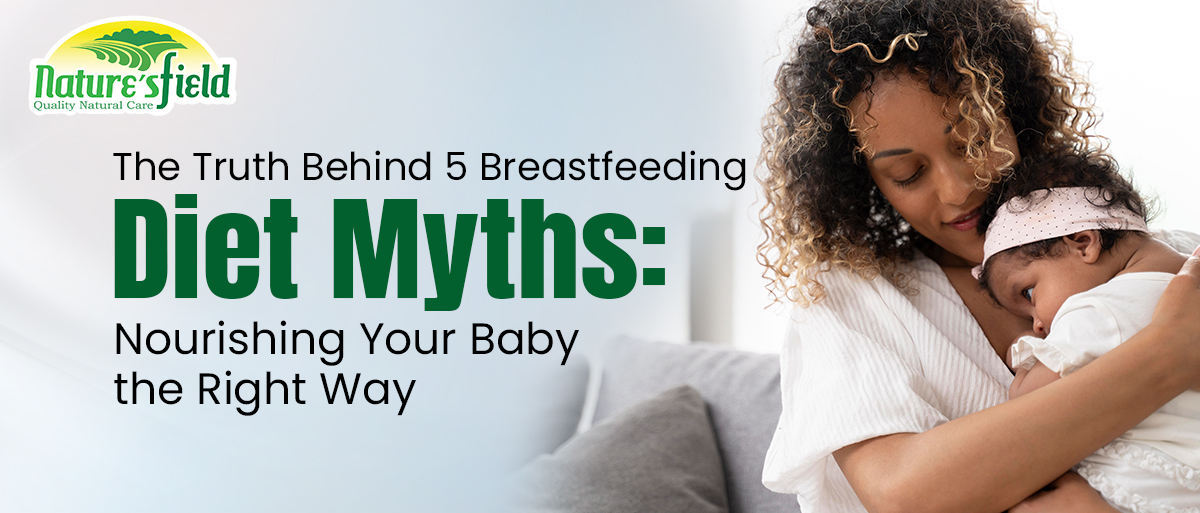
The Truth Behind 5 Breastfeeding Diet Myths: Nourishing Your Baby the Right Way
It is common to be overwhelmed with advice about what to eat and what to avoid when you’re breastfeeding especially if it’s your first time. Breastfeeding is one of the most natural and beneficial ways to nourish your baby. Many new moms hear warnings about foods and drinks to avoid, or strict eating rules they must follow. Realistically, how much of this advice is true?
The truth is that breastfeeding doesn’t require a perfect diet or written-down recipes you must follow. Also, many common food-related concerns are based on myths. In this article, we’ve debunked five widespread breastfeeding diet myths and how to nourish you and your baby.
Myth 1: if you have small breasts, you produce small milk but if you have large breasts, you produce a larger quantity of milk.
Truth: The size of the breasts has nothing to do with the amount of milk you produce. Milk supply is determined by the amount of glandular tissue you have. Also, the extent this fatty tissue expands during pregnancy and after your baby is born determines the amount of milk you produce. Milk supply also significantly depends on how much you breastfeed after your baby is born. This implies that the more you empty your breasts when feeding your baby, the more signals are sent to your brain to produce more milk.
Myth 2: You have to drink a lot of milk to produce milk.
Truth: Drinking milk won’t directly boost your breast milk supply. Breast milk production is primarily driven by demand, meaning the more your baby nurses, the more milk you produce.
Myth 3: Breastfeeding is an assured birth control method.
Truth: Granted, breastfeeding can delay or fluctuate your menstrual cycle but it is not a reliable birth control method. It is possible to get pregnant while breastfeeding. Therefore, consider more effective methods of birth control.
Myth 4: You must eat a perfect diet and drink a lot of water for steady breast milk production.
Truth: Your body naturally produces high-quality breast milk, even if your diet isn’t perfect. Generally, eating nutritious foods and staying hydrated are essential for your overall health and energy levels. Thankfully, occasional indulgences or slips won’t harm you or your baby. Therefore, focus on a balanced diet rich in proteins, healthy fats, fruits, and vegetables but don’t stress over every bite.
Myth 5: Certain foods will make your baby gassy.
Truth: Foods like beans, cabbage, and broccoli might cause gas in you, but they don’t necessarily make your baby gassy. Gas in breastfed babies is usually caused by swallowing air, an immature digestive system, or other factors, not your diet. If your baby seems extra fussy after you eat a particular food, monitor subsequent feeding and consult a medical professional if necessary.
What You Need to Know About Breastfeeding
Breastfeeding can be a challenging journey which comes with questions and a learning curve. The truth is, your body is incredibly wise and self-regulatory as it knows how to nourish your baby. Instead of stressing over strict food rules or myths, focus on eating a balanced, wholesome diet that fuels you and nourishes your body. This is because when you’re well-nourished, rested, and confident, your baby reaps the benefits too.
Additionally, prenatal vitamins are another vital element you shouldn’t neglect. Balancing between eating a healthy diet and paying attention to your baby virtually all day can take a toll on you. Thus, incorporate NATURE’S FIELD PREGMUM BREASTFEEDING into your routine to supplement those vital nutrients, such as vitamin E and vitamin D which might be lacking in your diet. Remember, there’s no perfect breastfeeding diet, but a healthy and mindful approach while feeding yourself fosters self-love which extends to your baby.
The postpartum period can be a blur, and you should do what you can to maintain your health and that of your baby too. Using NATURE’SFIELD PREGMUM BREASTFEEDING provides that premium support you need to glow even after breastfeeding.